01 The Friday Afternoon Shuffle

Every agency has a version of this ritual. It is Friday afternoon. The founder opens a spreadsheet, cross-references it with Xero or QuickBooks, and starts drafting follow-up emails to clients who have not paid. Some are 10 days late. Some are 45. Some are so overdue they have been mentally written off.
Each email requires a decision. How firm should the tone be? Is this client a first-time late payer or a repeat offender? Should the message sound casual or escalated? The founder spends 5 to 7 hours per week on this process. That is 260 to 364 hours per year of executive time spent on a task that generates zero new revenue.
The deeper problem is not the time. It is that manual follow-up is inherently inconsistent. The tone depends on the founder's mood. The timing depends on when they remember. The coverage depends on which invoices they happen to notice. There is no system. There is only effort.
02 The Record Keeper Illusion
Most agency owners believe their accounting software solves this problem. Xero tracks invoices. QuickBooks generates reports. FreshBooks sends automated reminders.
But there is a fundamental gap in what these tools actually do. They are record keepers, not recovery engines. They can tell you that Invoice #4012 is 30 days overdue. They cannot tell you that this specific client responds better to a casual tone on Tuesday mornings. They cannot tell you that the last three emails to this contact went unopened because the subject line was too formal.
The automated reminders these platforms send are identical templates. "Just a friendly reminder that Invoice #4012 is now overdue." Every client receives the same message regardless of their payment history, relationship tenure, or communication preferences. Clients can smell a template from a mile away. They deprioritize it because it signals mass automation, not personal attention.
Record keeping is necessary. But it is not recovery. The distinction costs agencies between 10% and 15% of their collectible revenue every year.
03 The Deterministic Alternative
What if the system that managed your accounts receivable could actually think before it wrote?
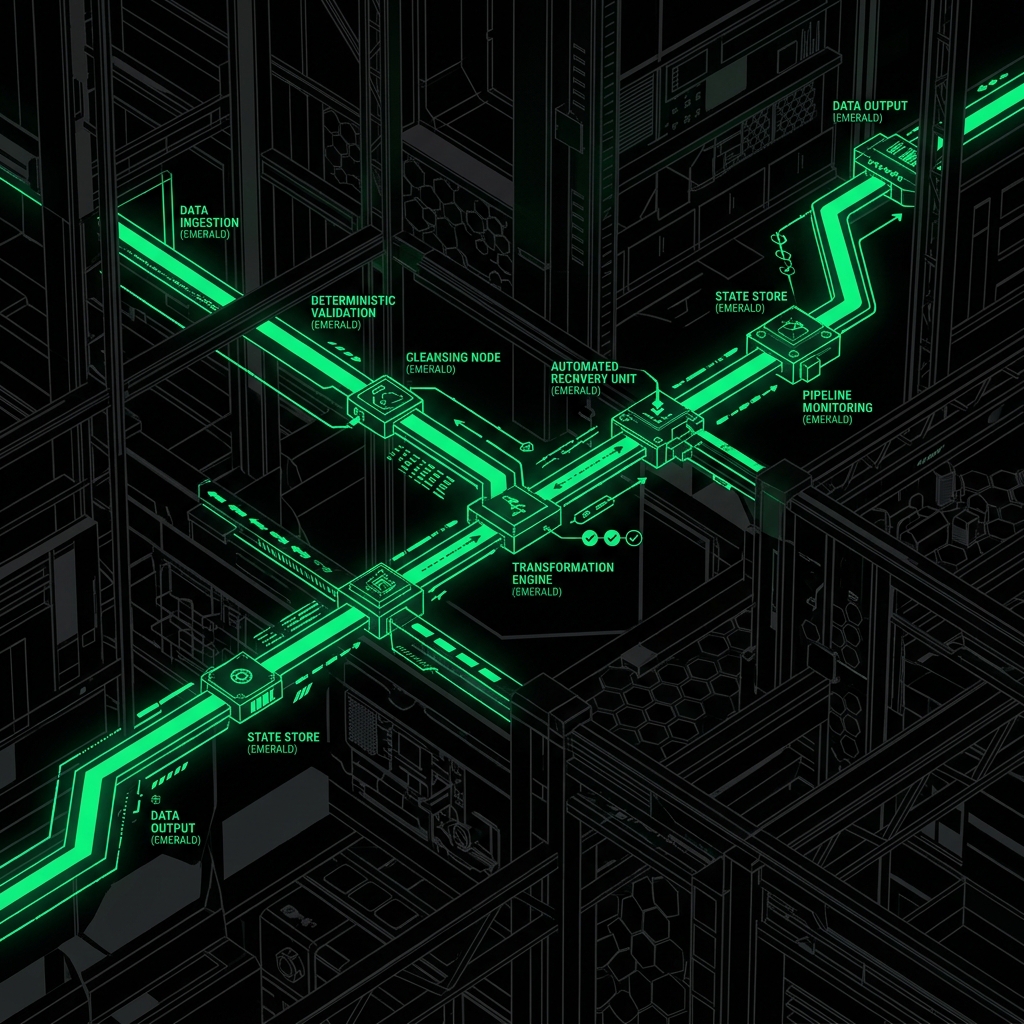
That is the architecture behind Invoice Sentinel. It is not a template engine. It is not a reminder scheduler. It is a deterministic state machine that reads each client's full payment history, communication record, and behavioral pattern before composing a single word.
// how the state machine works
Every invoice exists in one of several defined states: pending, nudge_1, nudge_2, escalation, final_notice. The system transitions between states based on elapsed time and client response. There is no ambiguity. There is no "I forgot to follow up." The machine moves forward on a schedule that never breaks.
At each transition, a context-aware AI model reads the client profile. It knows whether this is a first-time late payer (gentle, curious tone) or a chronic offender (direct, professional escalation). It references the relationship length, the invoice amount, and the client's historical response patterns. Then it generates a message that reads like it was written by someone who knows the account personally.
The result is follow-up that is 100% consistent, 100% personalized, and 0% manual.
04 The Comparison
05 The Result
The agencies that will dominate the next decade are not working harder on collections. They are not hiring more VAs to send more emails. They are replacing the entire category of manual follow-up with deterministic systems that run 24/7 without human intervention.
The 15% margin gap is not theoretical. It is the measurable difference between agencies that treat accounts receivable as a manual task and agencies that treat it as an engineering problem.
The question is not whether to automate. The question is how long you are willing to keep losing money while you decide.